An AI just scored 357 stocks. Here's what it found. (From TradingTips)
Micron's New Moat: The AI Memory Supercycle Written by Jeffrey Neal Johnson on March 5, 2026 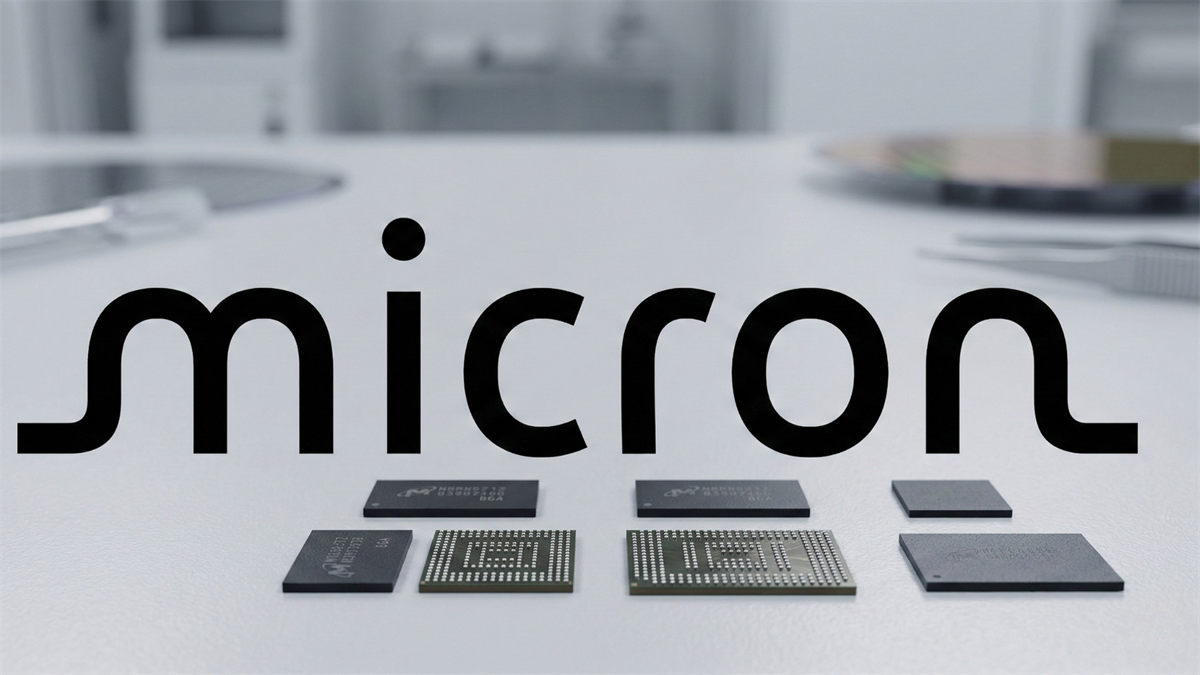
Key Points - The demand for High-Bandwidth Memory to power artificial intelligence has created immense pricing power for a limited number of key suppliers.
- Micron's recent earnings and forward-looking guidance point to unprecedented profitability, driven by record-setting gross margins.
- The company is making substantial investments in global manufacturing to meet what it sees as sustained, long-term demand from the AI infrastructure build-out.
- Special Report: ALERT: Drop these 5 stocks before the market opens tomorrow! (From Weiss Ratings)
 In a market where many high-flying technology stocks are facing intense scrutiny and volatility, semiconductor giant Micron Technology (NASDAQ: MU) is decisively breaking from the pack. Micron Technology’s stock price has risen by more than 340% over the past year, demonstrating powerful upward momentum that is outpacing the broader market’s gains. This striking divergence signals a fundamental shift that watchful investors are beginning to notice. The narrative of the artificial intelligence (AI) revolution is entering a new chapter. While the spotlight has long been on the makers of powerful graphics processing units (GPUs), the industry’s most critical bottleneck has quietly moved to the advanced, high-speed memory required to utilize them. This pivot places Micron squarely at the center of the AI hardware boom’s next lucrative phase. Why AI’s Thirst for Memory Is a Golden Opportunity The development of sophisticated AI models is one of the most computationally demanding tasks ever undertaken. At the heart of this process are GPUs, but their power is entirely dependent on how quickly they can access data. This is where High-Bandwidth Memory (HBM) becomes the kingmaker. Think of a GPU as a world-class factory; HBM is the high-speed logistics network that ensures raw materials (data) are delivered fast enough to keep the production lines running at maximum capacity. Without sufficient memory bandwidth, the AI factory will quickly grind to a halt. This indispensable role has turned HBM into a golden ticket. The market is a tight oligopoly, with Micron, SK Hynix, and Samsung (OTCMKTS: SSNLF) being the only major suppliers capable of producing HBM at scale. This limited supply of a mission-critical component has given Micron immense pricing power, a reality now clearly visible in its financial statements. In its first fiscal quarter of 2026, Micron reported an earnings per share (EPS) of $4.78, crushing analyst estimates of $3.77. The company's forecast for its second quarter, however, is what truly illustrates the magnitude of this opportunity. Management is guiding for record-setting revenue of $18.7 billion and an astonishing gross margin of approximately 68%. For context, this margin level far exceeds what is typically seen in the historically competitive memory market, signaling an unprecedented period of profitability. The demand is so strong that Micron’s entire 2026 HBM supply is already sold out under fixed-price-and-volume contracts, insulating a significant portion of its revenue from market fluctuations. How Micron Is Building a Long-Term Moat Sustaining this level of success requires more than just a single product; it requires a long-term vision. Micron’s strategic initiatives show it is aggressively building a moat to protect and expand its market position. The company has announced plans to boost capital expenditures to around $20 billion for the 2026 fiscal year. This massive investment is a clear signal that management sees the current demand as the foundation of a durable AI-driven supercycle. This capital is funding a multi-pronged global expansion to secure future growth. With substantial support from the U.S. CHIPS and Science Act, which de-risks these long-term investments, Micron is constructing next-generation manufacturing fabs in Idaho and New York. This move not only increases capacity but also strengthens the domestic semiconductor supply chain's resilience. Further, the company has already begun commercial production at its new assembly and test facility in India, diversifying its geographic footprint. While the memory industry has historically been cyclical, the demand driven by the AI infrastructure build-out appears to be a more structural and sustained force. Management has stated it expects memory supply to be substantially short of demand through and beyond 2026. By investing billions in geographically diverse, cutting-edge capacity today, Micron is ensuring it can meet this long-term demand and solidify its role as a foundational pillar of the AI economy. Introducing "Elon Musk's Day-One Retirement Plan"
What if you could compress a lifetime of wealth-building…
Ten… twenty… even thirty years…
Into a single 24-hour window?
It sounds absurd.
But Elon Musk is about to make it a reality with something I'm calling… "Day-One Retirement Plan." Click here to see the details. Positioned for Profit in the Next Phase of AI Micron's recent market outperformance is not arbitrary; it is the direct result of a strategic position at the confluence of technology and demand. The intense computational needs of modern AI have created a significant hardware bottleneck, which has now clearly shifted to high-performance memory. Micron is expertly converting this industry constraint into a powerful financial advantage. Its commanding position in the HBM market, backed by record-breaking profit margins and a forward-looking strategy to expand capacity, paints a clear picture of sustained growth. For investors looking to participate in the next, crucial stage of the AI revolution, Micron has established itself as a critical and highly profitable tollbooth on the road to the future, essential for unlocking the full potential of AI infrastructure. Read this article online › Featured Articles 
Did you enjoy this article?  
| 


No comments:
Post a Comment