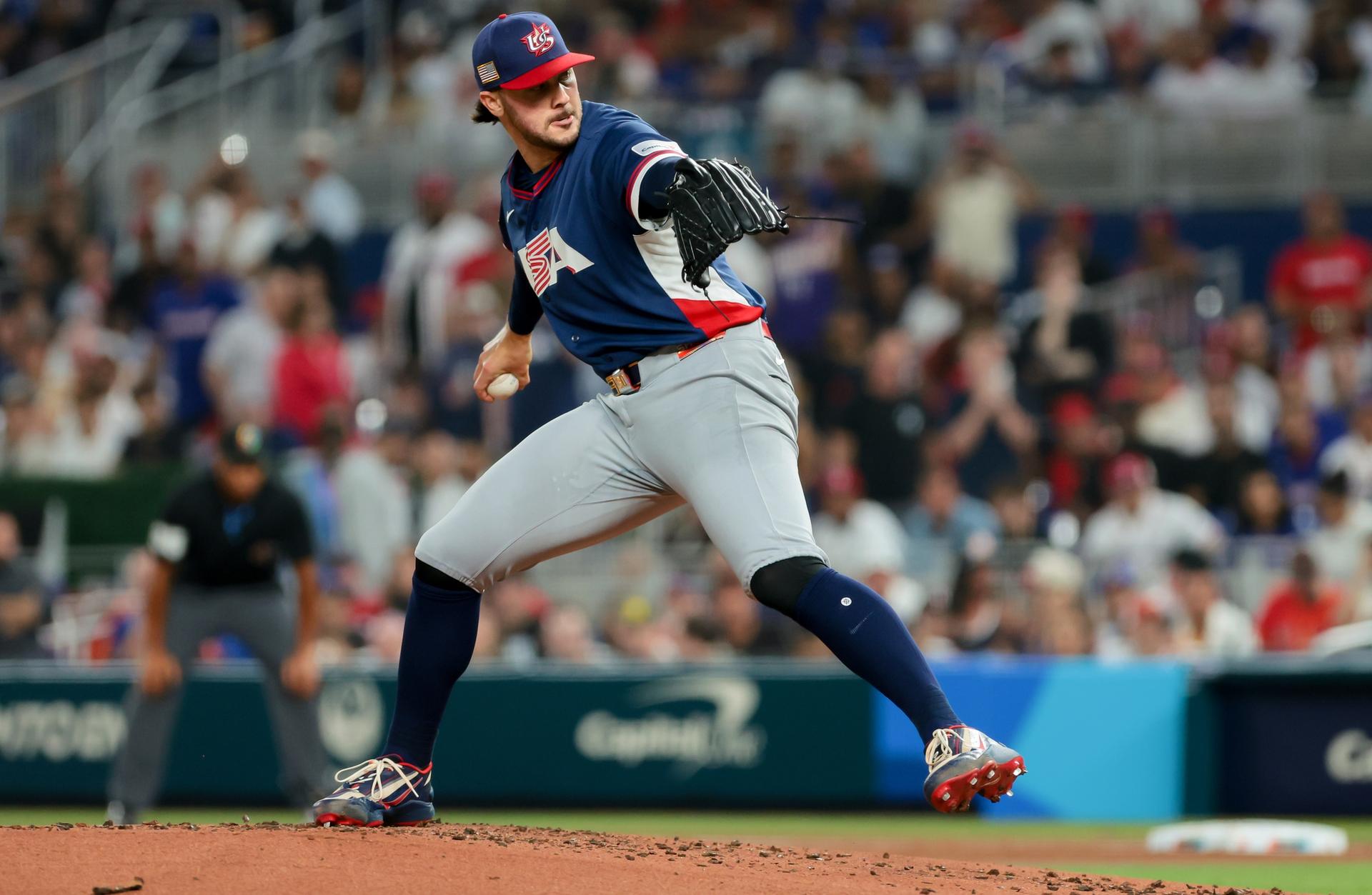
MIAMI — David Bednar is a pitcher who chooses among his three pitches as if perusing menu items of a 24-hour diner that serves breakfast all day.
"Any pitch, any time," he said.
His 61 pitches for Team USA entering the World Baseball Classic semifinal Sunday broke down in near-equal heaping portions: 25 fastballs, 20 splitters and 16 curveballs.
But the seventh-inning jam that ensnared him was not just "any time." Down 2–1, the Dominican Republic had runners on second and third against Bednar with one out and the top of its order due, Fernando Tatis Jr. and Ketel Marte. An out could have tied the game. A hit might have been the cause of sending home Team USA as branded underachievers.
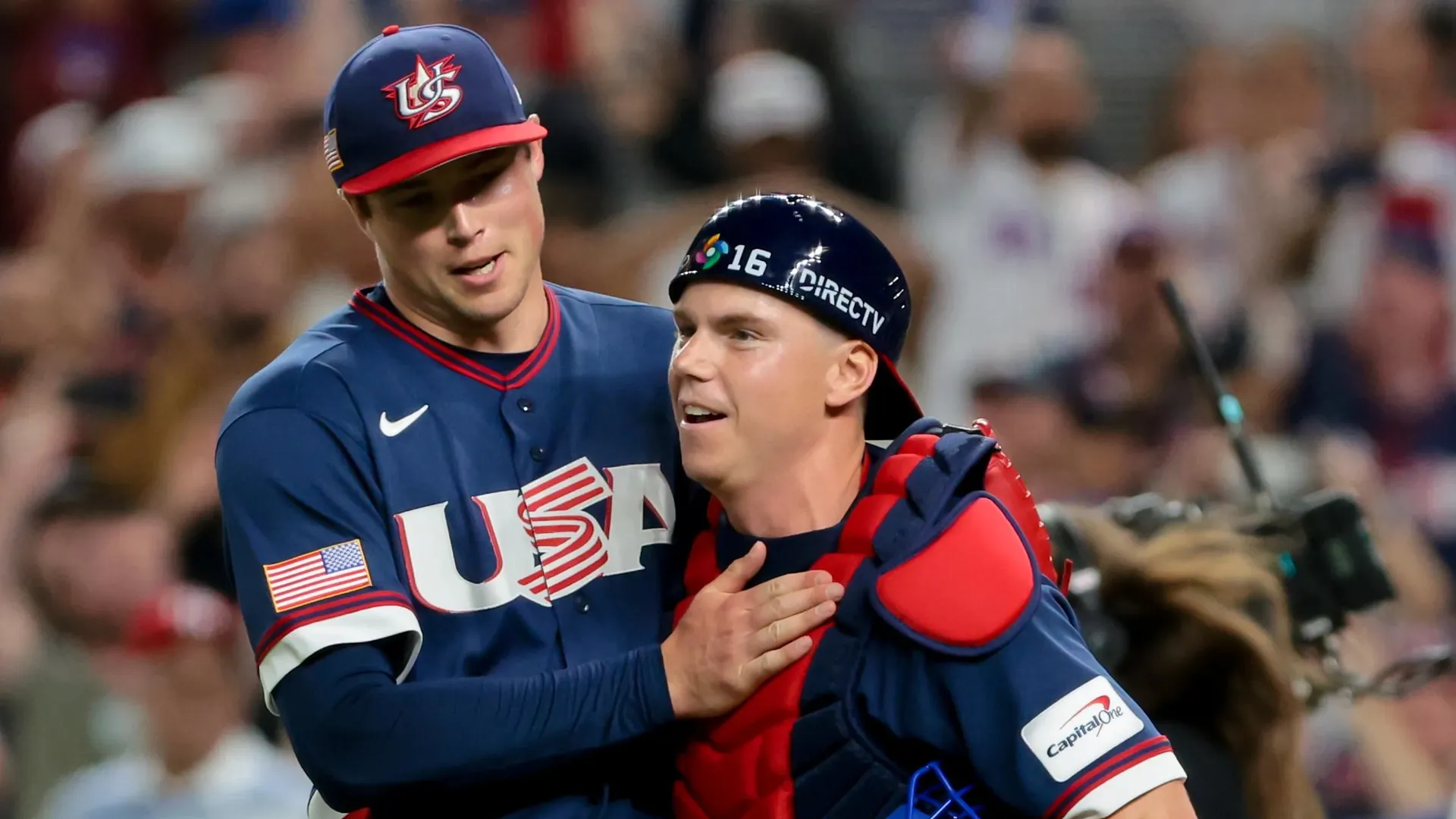
When he had to make a pitch, which one would he choose? He didn't. He simply followed the lead of catcher Will Smith, who had not caught Bednar until this tournament.
"The way I look at it," Bednar said, "he's been watching and following the hitters all game long. I trust him completely. I didn't shake once."
Nine pitches later, without any of them put in play, Team USA was off the field and effectively into the finals Tuesday to face the winner of the Italy-Venezuela semifinal Monday.
The baseball gods laugh at expectations. Sunday night they had a good chuckle. This game was supposed to be a slugfest. It began with what ranks among the greatest collections of talent on one field for any meaningful game ever played. The 18 starting players in the USA and Dominican batting orders combined for:
• 29 All-Star selections.
• 12 first- or second-place MVP finishes.
• 514 home runs last season, or nearly one of every 10 home runs hit in the 2025 season.
• $3.49 billion worth of current contracts, about what it cost to pay all 1,212 players in 2014.
Instead, we got a 2–1 nailbiter with 13 pitchers piling up 23 strikeouts, 15 by the losing staff. If you looked closely enough, the game's pivotal moment reminded us that when it comes to pitching excellence, you better pay attention to the catcher, too.
Smith helped win the game. He was a difference maker.
The at-bat against Tatis was a tour de force of Bednar's splitter. Smith opened the sequence with a splitter below the zone. Tatis swung over it. The catcher then went through the subterfuge of showing a fastball way up, designed simply to change Tatis's eye line. Smith, reading that first swing, knew where the escape hatch was.
The next pitch and the pitch after that were the same as the opening salvo: splitters tumbling out of the zone. Tatis bit on both. He swung over both. It was the biggest out of the game.
Now Marte, a good low-ball hitter, needed a hit to tie the game. Smith worked him with four straight high fastballs. Marte fouled off two and took one. The count was 1-and-2. It was time to go deeper into the menu. Smith called for a curveball. Marte was so fooled that his barrel was gone through the zone before the ball arrived. It was another pitch out of the zone. And another strikeout. Bednar escaped by getting two swinging strikeouts on secondary pitches out of the zone.
"I trust him completely," Bednar said. "Will and Cal [Raleigh] have done a tremendous job calling games. Think about the job they have. They're catching an entirely new staff and going through multiple pitching changes every game. And yet they don't miss a thing. It makes our job as pitchers a lot easier when you know you can put total trust in them."















No comments:
Post a Comment