Nobody noticed yet… but they will.
We just reached the end of an economic age.
Something that usually takes decades, even centuries, to play out just happened in what seems like a blink of an eye.
Unless you understand the magnitude of what just happened, you could risk losing everything you’ve worked so hard to achieve because this collapse is only just getting started.
You see, for our entire life, the story arc has been clean: it was the relentless rise, in both wealth and status, of a broad social class of professionals but that rainbow is now at an end.
Because for the first time ever, capital can now compound without additional labor.
The centuries-old relationship where job creation and GDP rose together has snapped and the economy can now scale without bringing workers along for the ride.
And this “snap” is about to change everything.
This is one of those moments in which I believe vast fortunes will be made and lost. I’m talking about a generational transfer of wealth… the type that can either enrich you or potentially impoverish you, based on the decisions you make.
Because history shows us that while these shifts always lead to catastrophic losses for those who refuse to prepare… they also unleash unprecedented wealth building potential for those who understand, and harness, the forces at work.
And this isn’t a prediction. It’s happening right now.
It’s why, although we’re seeing massive headline economic growth, the average American is being left behind.
AI Engels’ Pause
They don’t teach you this in school, but they should.
During the Industrial Revolution, Friedrich Engels noticed that although the revolution was making Britain incredibly rich when measured via GDP… the vast majority of British people were living in hell.
Between 1790 and 1840 Britain’s GDP exploded. The steam engine created massive efficiency gains, corporate profits doubled, and the stock market soared.
But for the average worker, real wages remained flat or fell… the average life expectancy in some industrial cities collapsed to just 35 years…
It was as though someone had pressed a giant “Pause” button on quality of life for the working class.
Of course, the wealth did eventually trickle down but it was half a century later and during that half century, the societal devastation was dire. It took two full generations for the labor market to adjust.
And the weavers who lost their jobs to power looms, they didn't become "machine repairmen."
They starved. They rioted. They were shot by the military or shipped to penal colonies. And it was Engels’ Pause that gave birth to Marxism.
And we’re seeing this again with AI.
The only difference is, this time it won’t take decades to play out. It took the radio 38 years to reach 50 million users. Television took 13. The internet took 4. But ChatGPT hit 100 million users in two months.
We are effectively speed-running the 19th century. We’re compressing 50 years of displacement into less than a decade… and this time the disruption isn’t coming for the illiterate farmhand…
It’s coming for the accountant. It’s coming for the lawyer. It’s coming for you and me.
Right now, knowledge work makes up roughly 50% of America’s GDP and much of that is at risk of automation in the next handful of years.
We’re talking about 5 million white-collar jobs — the bedrock of the American tax base – facing extinction over the next few years. Just take a look at the most recent cuts:
- U.S. Government: 307,000 employees
- UPS: 78,000 employees
- Amazon: 30,000 employees
- Intel: 25,000 employees
- Nissan: 20,000 employees
- Nestle: 16,000 employees
- Microsoft: 15,000 employees
- Bosch: 13,000 employees
- Dell: 12,000 employees
- Verizon: 13,000 employees
- Accenture: 11,000 employees
- Ford: 11,000 employees
- Novo Nordisk: 9,000 employees
- Microsoft: 7,000 employees
- PwC: 5,600 employees
- Salesforce: 4,000 employees
- IBM: 2,700 employees
- American Airlines: 2,700 employees
- Paramount: 2,000 employees
- Target: 1,800 employees
- General Motors: 1,500 employees
- Applied Materials: 1,444 employees
- Kroger: 1,000 employees
- Meta: 1,000 employees
It’s why AI is not just a productivity or efficiency tool, like everyone thinks, it’s a Labor Replacement Engine. And it’s why there’s such a gaping disconnect between the “real” economy and the stock market.
It’s why all the President’s claims of a “booming” economy don’t feel real for the tens of millions of people who don’t own assets.
It’s why, even though markets are hitting all-time highs, households are falling further and further behind. And this wealth divide is only going to be amplified as AI is integrated into every aspect of the economy.
IMF Managing Director Kristalina Georgieva just warned that artificial intelligence will hit the labor market like a “tsunami.”
The changes this will bring to the economy, stock market, and financial system are unprecedented. Which is why it’s critical that you watch my interview with Luke Lango.
We explain how all of these forces are converging to trigger an economic “reset” the likes of which we haven’t seen in 250 years – one that could trigger the greatest transfer of wealth in American history.
Both for the good and the bad.
Young or old. Rich or poor. Left wing or right… there is no escaping what’s coming. And yet, despite this inevitability, I promise you, you’ve never heard a whisper about this story before now.
Almost nobody… not the legacy financial media, political commentators, even the top analysts on Wall Street have connected these dots. But now, we’re sharing the full story with you.

The stocks to buy… the stocks to sell… and the three money moves our research indicates you should make to ensure you and your loved ones end up on the winning side of this new economic reality.
Because as you’ll discover today…
If you understand the new rules of this system…
You won't just survive the chaos, you’ll own the assets that could potentially make you a fortune as the American economy is reshaped from the ground up.
Good investing,
Porter Stansberry
Vertical Aerospace: Commercial Wins, Stock Price Lows
Authored by Jeffrey Neal Johnson. Publication Date: 2/7/2026.
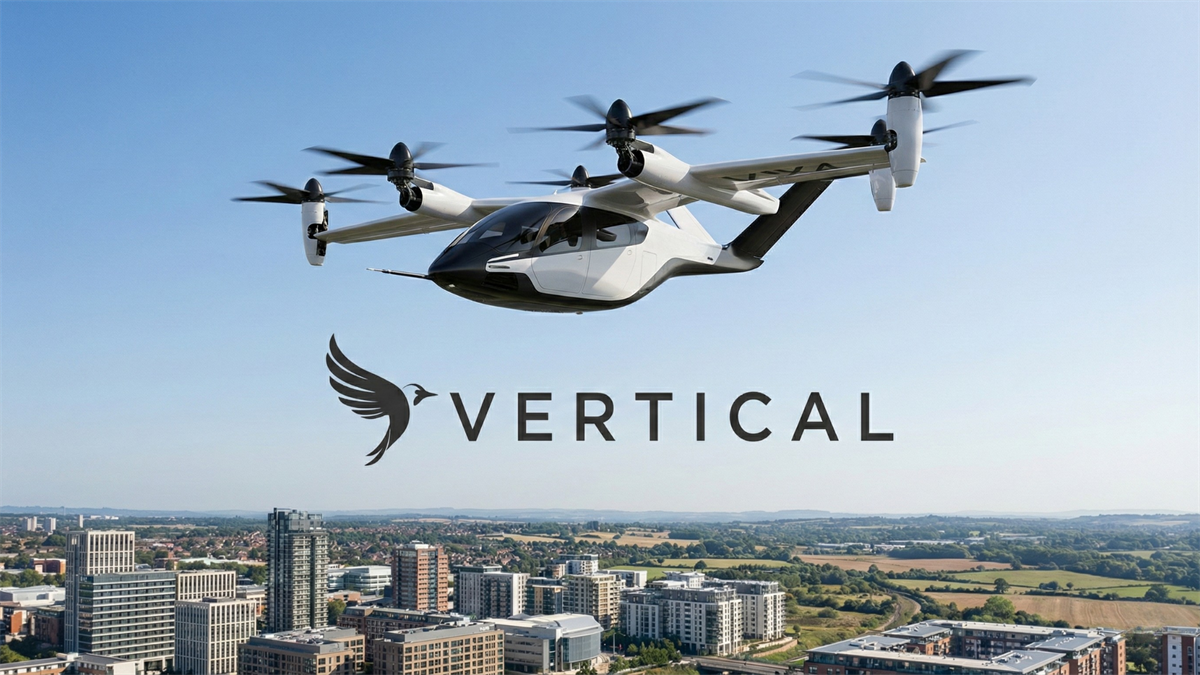
Key Points
- Vertical has secured major commercial agreements in India and Japan to expand its global footprint and validate commercial demand for its electric aircraft.
- Selecting a certified propulsion partner marks a critical step toward stabilizing the supply chain and de-risking the path to future certification.
- The company has expanded its flight-testing capacity by operating multiple active prototypes to accelerate development and meet critical engineering milestones.
- Special Report: [Sponsorship-Ad-2-Format3]
February 2026 has presented a stark contradiction for investors in Vertical Aerospace (NYSE: EVTL). On the surface, the company appears to be firing on all cylinders. In the first week of the month, the electric aircraft manufacturer released a flurry of positive news: major market entries in India and Japan, government grants in Singapore, and a critical propulsion partner for its flagship aircraft.
However, the market tells a different story. Vertical Aerospace's share price has retreated sharply, falling roughly 33% over the last month to trade near $4 as of February 5.
This makes me furious (Ad)
I Called Black Monday. Now I'm Calling March 26!
I predicted the 1987 crash six weeks early. I called the fall of the Berlin Wall. I pinpointed the exact bottom in 2009.
Now I'm staking my reputation on March 26, 2026 - the day I believe Elon will announce the SpaceX IPO.
Bloomberg is calling it "the biggest listing of ALL TIME."
A $1.5 TRILLION valuation... the "wealth-building" moment of the decade.
Today, I'll show you how to get in before the big announcement.
This disconnect between operational momentum and market sentiment creates a confusing picture. Even as the company builds its order pipeline and solidifies its supply chain, Wall Street appears focused on two anxieties: its capital structure and the timing of a critical flight test.
For investors, the key question is whether the price decline reflects a fundamental failure of the business or a temporary dislocation in which the share price has detached from the company's growing intrinsic value.
From India to Japan: Stacking Real Wins
While the stock chart flashes red, Vertical Aerospace's commercial team has been delivering tangible progress around the world. In early February, the company announced a series of agreements that do more than generate headlines; they validate global demand for its Valo aircraft across diverse regulatory environments.
Arguably the most important operational win was selecting Evolito as the supplier for the aircraft's Electric Propulsion Units (EPUs). Evolito was spun out of YASA, a company owned by Mercedes-Benz Group (OTCMKTS: MBGYY), and holds a Design Organisation Approval from the UK Civil Aviation Authority (CAA).
For investors, that regulatory stamp is a material de‑risking factor. It paves a clearer path for certifying the propulsion system—the heart of any electric aircraft—while leveraging high-performance technology with an automotive pedigree.
At the same time, Vertical opened a significant new market by signing a Memorandum of Understanding (MoU) with JetSetGo in India. The agreement outlines the intended purchase of 50 Valo aircraft and establishes a partnership to develop routes in one of the world's most populous nations. India is an especially strong use case for eVTOLs because of severe urban congestion and infrastructure constraints.
In Japan, Vertical deepened its relationship with Marubeni. Unlike many industry partnerships that remain theoretical, this one is backed by hard capital—Marubeni has made pre-delivery payments to secure aircraft—and the partners are accelerating plans for piloted demonstration flights in Osaka in 2026. Coupled with a grant from HTX/Hatch in Singapore to develop Emergency Medical Services (EMS) capabilities, Vertical is showing that its aircraft can address public-sector needs as well as private aviation markets.
The Dilution Dilemma Explained
If the commercial news is so positive, why is the stock tumbling? The answer lies in corporate finance and the fear of dilution. On Jan. 20, 2026, Vertical Aerospace held an Extraordinary General Meeting (EGM) where shareholders approved a large increase in the company's authorized share capital—from 200 million to 1 billion ordinary shares.
For existing shareholders, that authorization signals that significant equity issuance is likely. To fund the estimated $700 million net cost required to reach certification in 2028, the company will probably need to issue more stock. New share issuance dilutes existing ownership, and the market is pricing in this capital overhang, expecting shares may be sold at a discount to raise cash—an expectation that puts downward pressure on the share price in the near term.
There is a counter-argument. The authorization can also be seen as a necessary strategic war chest. In the capital-intensive aerospace sector, running out of cash is often existential. By securing the ability to issue shares, management has removed an imminent insolvency risk and preserved the option to fund the roadmap through certification. While dilution is painful, survival is a prerequisite for creating long-term value.
This dynamic has attracted short sellers; short interest has risen to roughly 20% of the public float. That crowded trade raises the stakes: positive operational news (for example, a successful transition flight) could force short sellers to cover, potentially triggering a sharp rally.
The Missing Catalyst: Silence on the Runway
Beyond the funding story, the market is anxiously awaiting a specific technical milestone. The company previously guided that its Phase 4 piloted transition flight campaign—where the aircraft shifts from vertical helicopter mode to wing-borne airplane mode—would be completed in early 2026. That campaign began in November 2025, and the absence of a completion announcement has heightened investor nervousness. In the absence of news, markets often assume delays.
There is reason for cautious optimism. As of January 2026, Vertical has two full-scale prototypes active in its testing program. That redundancy is a meaningful advantage: a single mechanical issue can ground a program for weeks, but with two aircraft the team can continue gathering data even if one unit is sidelined for maintenance, which should help accelerate development.
While the silence on the transition flight likely contributes to the stock's weakness, it also sets up a binary catalyst. A successful announcement would validate the engineering and could reset market sentiment, shifting attention back to the company's commercial progress. Until that headline arrives, the stock may remain in a holding pattern.
High Risk, Vertical Reward?
Vertical Aerospace currently has a market capitalization of about $406 million. That valuation is a fraction of key competitors', despite Vertical having a comparable commercial order book and a certified engine partner. Wall Street analysts maintain an average price target near $11.80, implying significant upside from current levels if the company executes its plan.
The gap between the current share price and analyst expectations suggests a market waiting for proof. Investors are weighing the near-certainty of future dilution against the potential payoff of a certified, commercially viable electric aircraft.
Vertical has built commercial relationships and supply-chain foundations; now it must prove it can fund the journey and complete the technical milestones.
If the company can navigate its capital needs and deliver a successful transition flight, the current valuation disconnect could close quickly. For now, the stock is a battleground between commercial momentum and financial gravity.
BlueBird 6 Unfolds: AST SpaceMobile Unlocks Commercial Growth
Authored by Jeffrey Neal Johnson. Publication Date: 2/12/2026.
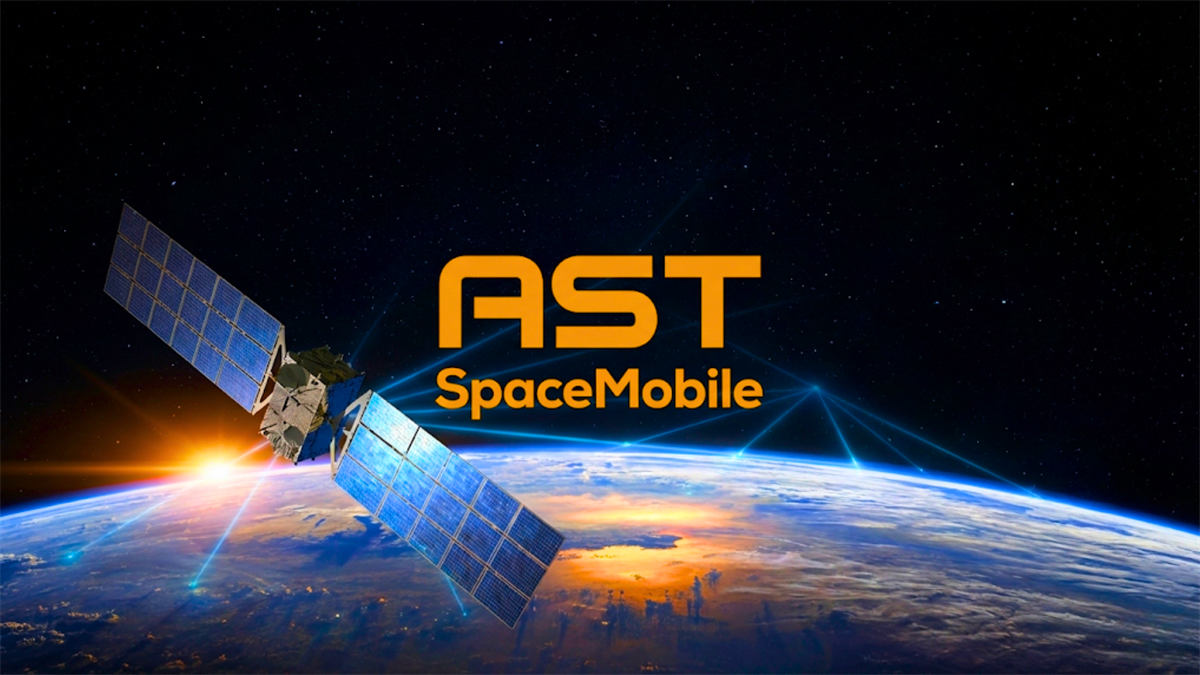
Key Points
- AST SpaceMobile's successful orbital deployment of the massive commercial array validates the technology required to deliver cellular broadband directly to standard mobile devices.
- Confirmed technical viability allows the company to activate definitive commercial agreements and unlock contracted revenue streams from major global network operators.
- Strong liquidity positions the company to accelerate manufacturing efforts and execute a diverse launch campaign to achieve continuous service coverage in key markets.
- Special Report: [Sponsorship-Ad-2-Format3]
AST SpaceMobile (NASDAQ: ASTS) has confirmed a pivotal achievement in telecommunications: the successful deployment of the BlueBird 6 satellite in Low Earth Orbit (LEO). This event marks the company’s transition from a speculative research and development outfit into an operational industrial enterprise.
For years, the primary investment thesis for AST SpaceMobile hinged on a single, high-stakes engineering question: could their massive satellite hardware deploy and operate in the harsh environment of space? That question has now been answered with a resounding yes.
Why are central banks buying before March 31? (Ad)
Central banks bought more gold last year than in any year since 1967 — and the pace is accelerating just as physical demand begins to overwhelm paper supply. The next major delivery cycle opens March 31, when paper contract holders can demand physical gold from Western vaults. Dylan Jovine at Behind the Markets has identified one small company sitting on one of the largest undeveloped gold deposits in North America, positioned to benefit if this supply-demand imbalance intensifies after the delivery window opens.
See Dylan Jovine's Gold Miner Pick Before the March 31 Delivery WindowThis deployment validates the mechanical architecture for the company’s next-generation Block 2 constellation. As the stock trades near $97 per share and the company carries a market capitalization of roughly $35.6 billion, the market is beginning to price in AST SpaceMobile’s potential to disrupt the global telecom sector.
While daily price volatility remains a factor, this technical success effectively removes the primary science risk associated with the stock. For investors, the narrative has shifted from "will the technology work?" to "how quickly can they deploy it?"
The Orbiting Cell Tower: Why BlueBird 6 Matters
BlueBird 6 is more than an incremental upgrade; it represents a step change in orbital infrastructure. To appreciate the magnitude of this achievement, consider the specifications that set this hardware apart from anything else in orbit:
- Massive scale: The satellite features a communications array spanning approximately 2,400 square feet, making it the largest commercial communications array ever deployed in Low Earth Orbit.
- Beamforming capability: The large aperture lets the satellite transmit signals strong enough to be received by standard, unmodified smartphones. This is the company’s competitive moat: no special dishes or ground hardware are required.
- Broadband speeds: The Block 2 architecture supports peak data speeds up to 120 Mbps, roughly a tenfold increase in bandwidth capacity compared with earlier test models.
That capability is central to AST SpaceMobile’s Direct-to-Device (D2D) strategy. By proving the viability of a large-scale structure in orbit, the company has shown it can deliver true broadband (voice, video, and data) rather than the limited emergency messaging services offered by some competitors.
Turning Technology Into Cash
This technical validation is the trigger for the company’s commercial ambitions. Definitive commercial agreements with major carriers, including AT&T (NYSE: T) and Verizon (NYSE: VZ) in the United States, are contingent on a functioning network; proving the Block 2 design works in orbit clears the path to activate these contracts for broad coverage.
The financial implications are immediate. AST SpaceMobile has secured more than $1 billion in aggregate contracted revenue commitments. That total includes a notable 10-year agreement with stc Group for coverage in the Middle East and North Africa, which included a $175 million prepayment. BlueBird 6 turns these contracts from theoretical agreements into actionable revenue streams, improving visibility into future cash flow.
Funded for Growth: The $3.2 Billion Safety Net
A common pitfall for high-growth space companies is the cash burn needed to build a constellation. AST SpaceMobile has mitigated this risk through aggressive capital raising and strategic partnerships. Based on the latest updates, including Q3 2025 financial data and recent capital raises, the company holds approximately $3.2 billion in cash and liquidity.
That balance provides a meaningful safety net. AST SpaceMobile is funded for its initial target constellation of more than 100 satellites, which materially reduces the likelihood of near-term equity dilution that often depresses valuations in the capital-intensive aerospace sector. The company has the resources to manage the ramp-up without needing to access the public markets from a position of weakness.
The Texas Production Engine
With funding secured and the technology validated, capital allocation is focused on the company’s manufacturing facility in Midland, Texas. The facility is ramping up toward a target production rate of six satellites per month. BlueBird 6’s success validates the manufacturing processes used to build it, enabling replication at scale.
Strategic investments and partnerships with companies like Verizon, Vodafone (NASDAQ: VOD), and Google (NASDAQ: GOOGL) add another layer of financial security and industry validation that complements venture capital and public funding.
Next Up: BlueBird 7 & New Glenn
Investors won’t have to wait long for the next catalyst. The launch of BlueBird 7 is scheduled for late February 2026 aboard Blue Origin’s New Glenn rocket, highlighting a strategic advantage: diversity in launch providers. By using both SpaceX and Blue Origin, AST SpaceMobile reduces exposure to delays from any single provider and de-risks its deployment schedule.
The Path to Continuous Coverage
The company has set an ambitious target for the remainder of 2026: launching 45 to 60 satellites. Achieving that cadence is the primary metric investors should monitor.
Reaching this target would enable continuous service in key high-value markets—specifically the United States, Europe, and Japan. Continuous coverage is the threshold that triggers significant revenue sharing with mobile network operators and marks the start of the commercial growth phase.
The Moat Is Real: A New Era for Telecom
AST SpaceMobile has successfully crossed the "valley of death" that claims many deep-tech startups. The technology has been demonstrated, the balance sheet is fortified with more than $3 billion in liquidity, and customer demand is contractually secured.
With the primary technical risk retired by BlueBird 6’s successful deployment, the stock now represents an opportunity to invest in a company positioning itself as a leading provider of space-based broadband. Going forward, execution of the 2026 launch manifest will determine how quickly the company can scale and capture value. The transition from concept to operational reality is complete—the focus now is on speed and scale.
This email message is a sponsored message from Porter & Company, a third-party advertiser of MarketBeat. Why did I get this message?.
If you have questions or concerns about your subscription, please feel free to email our South Dakota based support team at contact@marketbeat.com.
If you would no longer like to receive promotional emails from MarketBeat advertisers, you can unsubscribe or manage your mailing preferences here.
Copyright 2006-2026 MarketBeat Media, LLC. All rights protected.
345 N Reid Place #620, Sioux Falls, SD 57103-7078. USA..




No comments:
Post a Comment