 Nobody noticed yet… but they will. We just reached the end of an economic age. Something that usually takes decades, even centuries, to play out just happened in what seems like a blink of an eye. Unless you understand the magnitude of what just happened, you could risk losing everything you’ve worked so hard to achieve because this collapse is only just getting started. You see, for our entire life, the story arc has been clean: it was the relentless rise, in both wealth and status, of a broad social class of professionals but that rainbow is now at an end. Because for the first time ever, capital can now compound without additional labor. The centuries-old relationship where job creation and GDP rose together has snapped and the economy can now scale without bringing workers along for the ride. And this “snap” is about to change everything. This is one of those moments in which I believe vast fortunes will be made and lost. I’m talking about a generational transfer of wealth… the type that can either enrich you or potentially impoverish you, based on the decisions you make. Because history shows us that while these shifts always lead to catastrophic losses for those who refuse to prepare… they also unleash unprecedented wealth building potential for those who understand, and harness, the forces at work. And this isn’t a prediction. It’s happening right now. It’s why, although we’re seeing massive headline economic growth, the average American is being left behind. AI Engels’ Pause They don’t teach you this in school, but they should. During the Industrial Revolution, Friedrich Engels noticed that although the revolution was making Britain incredibly rich when measured via GDP… the vast majority of British people were living in hell. Between 1790 and 1840 Britain’s GDP exploded. The steam engine created massive efficiency gains, corporate profits doubled, and the stock market soared. But for the average worker, real wages remained flat or fell… the average life expectancy in some industrial cities collapsed to just 35 years… It was as though someone had pressed a giant “Pause” button on quality of life for the working class. Of course, the wealth did eventually trickle down but it was half a century later and during that half century, the societal devastation was dire. It took two full generations for the labor market to adjust. And the weavers who lost their jobs to power looms, they didn't become "machine repairmen." They starved. They rioted. They were shot by the military or shipped to penal colonies. And it was Engels’ Pause that gave birth to Marxism. And we’re seeing this again with AI. The only difference is, this time it won’t take decades to play out. It took the radio 38 years to reach 50 million users. Television took 13. The internet took 4. But ChatGPT hit 100 million users in two months. We are effectively speed-running the 19th century. We’re compressing 50 years of displacement into less than a decade… and this time the disruption isn’t coming for the illiterate farmhand… It’s coming for the accountant. It’s coming for the lawyer. It’s coming for you and me. Right now, knowledge work makes up roughly 50% of America’s GDP and much of that is at risk of automation in the next handful of years. We’re talking about 5 million white-collar jobs — the bedrock of the American tax base – facing extinction over the next few years. Just take a look at the most recent cuts: - U.S. Government: 307,000 employees
- UPS: 78,000 employees
- Amazon: 30,000 employees
- Intel: 25,000 employees
- Nissan: 20,000 employees
- Nestle: 16,000 employees
- Microsoft: 15,000 employees
- Bosch: 13,000 employees
- Dell: 12,000 employees
- Verizon: 13,000 employees
- Accenture: 11,000 employees
- Ford: 11,000 employees
- Novo Nordisk: 9,000 employees
- Microsoft: 7,000 employees
- PwC: 5,600 employees
- Salesforce: 4,000 employees
- IBM: 2,700 employees
- American Airlines: 2,700 employees
- Paramount: 2,000 employees
- Target: 1,800 employees
- General Motors: 1,500 employees
- Applied Materials: 1,444 employees
- Kroger: 1,000 employees
- Meta: 1,000 employees
It’s why AI is not just a productivity or efficiency tool, like everyone thinks, it’s a Labor Replacement Engine. And it’s why there’s such a gaping disconnect between the “real” economy and the stock market. It’s why all the President’s claims of a “booming” economy don’t feel real for the tens of millions of people who don’t own assets. It’s why, even though markets are hitting all-time highs, households are falling further and further behind. And this wealth divide is only going to be amplified as AI is integrated into every aspect of the economy. IMF Managing Director Kristalina Georgieva just warned that artificial intelligence will hit the labor market like a “tsunami.” The changes this will bring to the economy, stock market, and financial system are unprecedented. Which is why it’s critical that you watch my interview with Luke Lango. We explain how all of these forces are converging to trigger an economic “reset” the likes of which we haven’t seen in 250 years – one that could trigger the greatest transfer of wealth in American history. Both for the good and the bad. Young or old. Rich or poor. Left wing or right… there is no escaping what’s coming. And yet, despite this inevitability, I promise you, you’ve never heard a whisper about this story before now. Almost nobody… not the legacy financial media, political commentators, even the top analysts on Wall Street have connected these dots. But now, we’re sharing the full story with you. 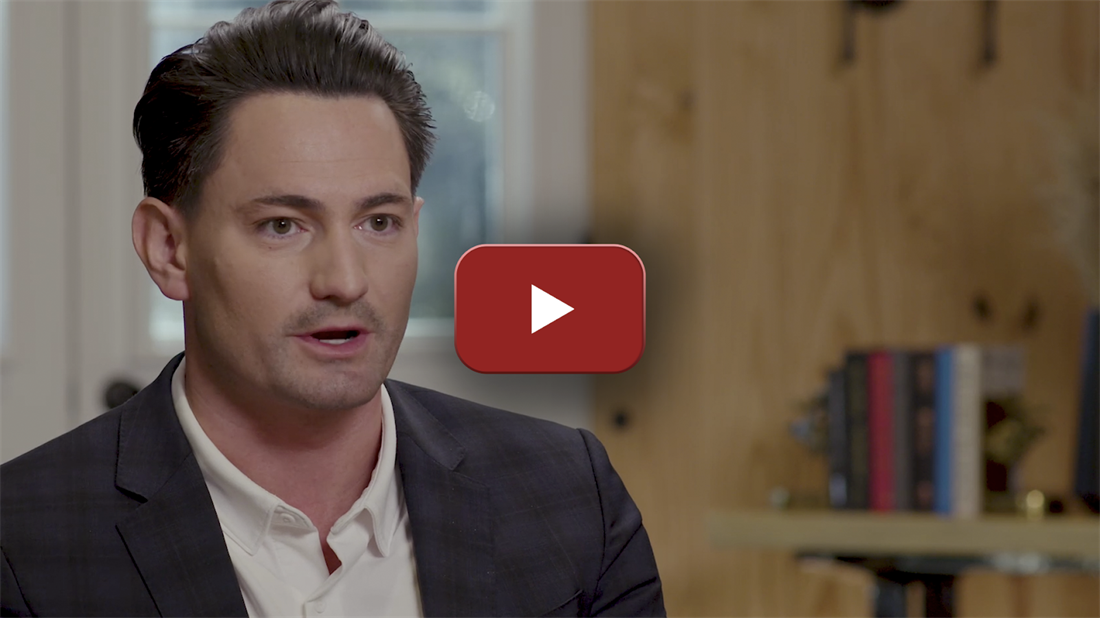
The stocks to buy… the stocks to sell… and the three money moves our research indicates you should make to ensure you and your loved ones end up on the winning side of this new economic reality. Because as you’ll discover today… If you understand the new rules of this system… You won't just survive the chaos, you’ll own the assets that could potentially make you a fortune as the American economy is reshaped from the ground up. Watch it here now. Good investing, Porter Stansberry
Wednesday's Featured News The Memory Supercycle Is Here—2 Winners From 1 BreakupSubmitted by Jeffrey Neal Johnson. Posted: 2/4/2026. 
Article Highlights- SanDisk is experiencing explosive growth driven by the need for high-speed drives that save the progress of artificial intelligence models during training.
- Western Digital is securing its position as a pillar of stability by returning capital to shareholders while providing the data lakes needed for storage.
- A shortage of manufacturing capacity for standard memory chips has created a favorable supply environment, supporting durable pricing power for the industry.
While the broader stock market has long focused on the processors that power artificial intelligence (AI), a massive rotation is underway into the hardware that provides AI with memory. About a year ago, Western Digital (NASDAQ: WDC) spun off its flash memory business to create SanDisk (NASDAQ: SNDK) as a standalone company. The market response has been dramatic. SanDisk has surged roughly 1,500% since listing in early 2025, including a 140% gain in the past 30 days. As of Feb. 3, 2026, SanDisk stock is trading near all-time highs of about $665. Meanwhile, its former parent, Western Digital, has also rallied strongly—up roughly 350% over the past year to the $280–$290 range. Do you own the worst stock of 2026? [Name + Ticker]
He issued warnings for RNG before it crashed 89%, BYND before it crashed 90%, TDOC before it crashed 84%, and FVRR before it crashed 86%. Now, he's stepping forward to name the popular stock that could go down as one of the worst-performing tickers of the year. It could be the most dangerous stock of 2026. Click here for its name and ticker, 100% free. That divergence signals the arrival of a memory supercycle. AI infrastructure has split the storage market into two necessary lanes: extreme speed and massive capacity. The separation of SanDisk and Western Digital unlocked value by letting each company specialize in one of those lanes, creating two distinct investment profiles. SanDisk: The Vertical Growth EngineSanDisk is trading as a high-octane proxy for AI processing speed. Recent results suggest this rally is rooted in fundamentals rather than pure speculation. In its earnings report on Jan. 29, 2026, SanDisk posted numbers that surprised the Street: - Revenue: $3.03 billion, a 61% year-over-year increase.
- Earnings Per Share (EPS): $6.20, beating Wall Street estimates by nearly $3.
- Gross margins: Expanded to 51.1%, up sharply from 29.9% in the prior quarter.
The primary catalyst, however, is forward guidance. Management projects next-quarter EPS will roughly double sequentially to $12–$14. If realized, that outlook implies the stock's price-to-earnings ratio (P/E) could compress relative to its future earnings, making the valuation look more attractive. The underlying driver is a technical need called AI checkpointing. When massive AI models are trained, they must frequently save progress so a crash doesn't erase days or weeks of compute—an event that can cost millions in wasted time and electricity. To support checkpointing, data centers deploy SanDisk's enterprise solid-state drives (SSDs) to write huge volumes of data quickly. That demand is largely inelastic—organizations training large models cannot forgo fast, reliable storage. As a result, SanDisk projects gross margins of 65% to 67% next quarter, reflecting strong pricing power. Wall Street moved fast to update forecasts. After the report, UBS raised its price target to $1,000, Cantor Fitzgerald to $800, and both Barclays and Citigroup to $750. Those upward revisions, along with others, suggest analysts had previously underestimated demand for storage that combines speed and capacity. Western Digital: The Value FortressWhile SanDisk chases aggressive growth, Western Digital has positioned itself as a stability and capital-return play. The company focuses on cold storage—the massive repositories where data accumulates before processing. On Feb. 3, 2026, Western Digital's board authorized an additional $4 billion in share repurchases. That buyback signals management believes the stock remains undervalued despite the rally. Western Digital reported $3.02 billion in revenue for fiscal Q2, a 25% year-over-year increase. Unlike the volatile flash market, the hard disk drive (HDD) market tends to offer greater stability. AI training datasets consist of petabytes of raw video, text and imagery; storing that chiefly on flash would be prohibitively expensive, so much of it resides in data lakes built on Western Digital's high-capacity drives. Key elements of the Western Digital thesis include: - The 100TB roadmap: WDC has outlined a path to 100-terabyte drives, which are important for hyperscalers.
- UltraSMR adoption: New UltraSMR drives, including the current 32TB and upcoming 40TB models, now represent more than 50% of shipments, helping margins expand.
- Long-term agreements: The company has secured multi-year supply pacts with major customers that extend through 2028.
For income-focused investors, Western Digital offers a yield narrative—the $4 billion buyback plus a quarterly cash dividend of $0.125 per share adds to the capital-return story. The Wafer Wars & a Zero-Sum Supply ChainSome investors worry rapid price increases in the memory sector will spur a supply glut and eventual price collapse. This cycle is different because manufacturing capacity is effectively zero-sum. Semiconductor fabs are prioritizing High Bandwidth Memory (HBM), which is stacked directly onto AI accelerators. Fabs can only process a finite number of silicon wafers each month. The shift toward HBM therefore reduces the wafer supply available for standard flash memory and storage controllers, creating a physical supply floor. Manufacturers can't instantly flood the market with chips because raw materials and tool time are being reallocated—supporting a more durable pricing environment for both SanDisk and Western Digital. SanDisk has also taken steps to secure its supply chain: the company extended its joint venture with Kioxia through 2034, locking in wafer supply and reducing a key operational risk. On the technology front, SanDisk is developing an architecture called High Bandwidth Flash (HBF). Unlike traditional storage, HBF places flash closer to the processor and could handle some AI inference workloads that previously required expensive DRAM. If it delivers, HBF would expand SanDisk's total addressable market and help justify a premium valuation. The Storage Supercycle: Sprinters and Marathon RunnersThe AI trade has matured. It's no longer just about the logic chips that do the thinking; it's also about where and how the data lives. The spin-off of SanDisk from Western Digital proved strategically astute, creating two distinct companies tailored to different investor appetites. SanDisk is the sprinter: high beta exposure to immediate AI processing needs, more volatile but growing earnings rapidly. Western Digital is the marathon runner: lower volatility, steady capital returns via buybacks and dividends, and exposure to the exploding volume of stored data. In 2026, portfolios that make room for both profiles—speed and scale—may be better positioned for the memory supercycle.
| 


No comments:
Post a Comment