Today: Inside the CFP impasse, 1-on-1 with Darian Mensah, portal winners, and a buyouts breakdown. |
|
|
 | ~8.0 minute read (1,905 words) | | |
|
|
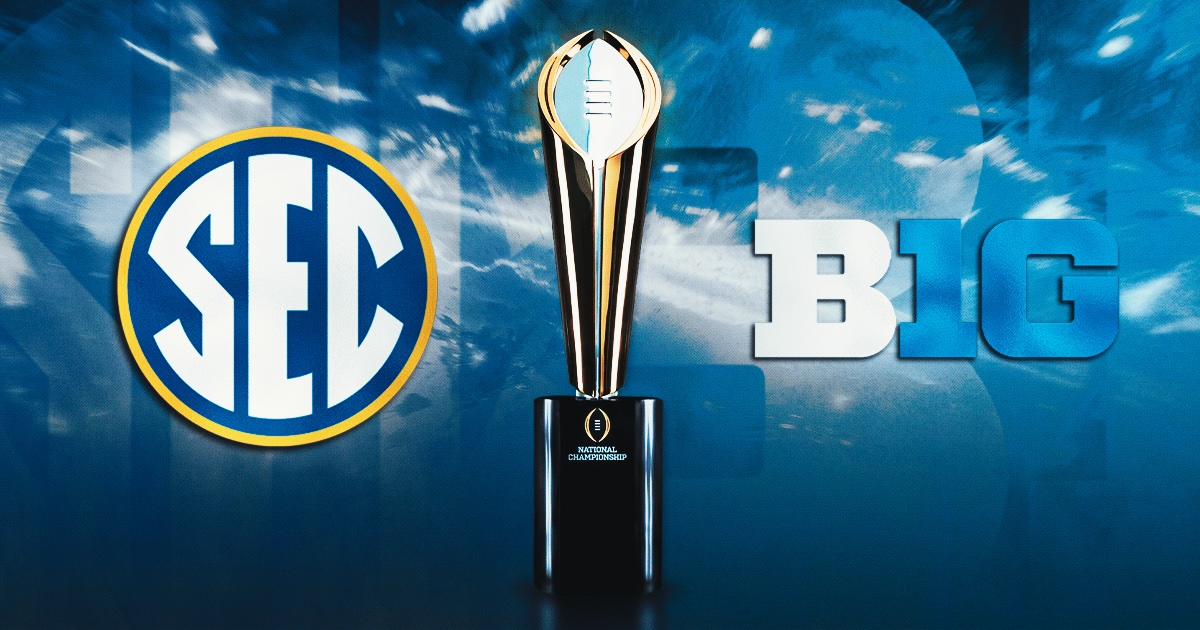
Big Ten, SEC demanded power to determine CFP format, but can't come to a decision |
Despite a collective desire from all 10 conference commissioners and Notre Dame's Pete Bevacqua to see the College Football Playoff expand next season, the CFP officially announced last week that the 12-team format is staying put for 2026. Everyone wants more teams, yet we're stuck at 12. Why? The official line from CFP executive director Rich Clark is that this "gives the Management Committee additional time to review the 12-team format." He suggests another year of evaluation will help assess the need for change. That reasoning, to put it bluntly, is bullshit. Don't blame Clark; he's just the messenger. The blame lies squarely with The Two: the Big Ten and the SEC. Nearly two years ago, these two behemoths demanded total control over the future of the postseason. It was a "give us the keys or we'll burn the house down" moment. They got the power, held endless meetings, and have managed to produce exactly zero progress. "The Two wanted the power to make a decision," an industry source told On3, "and now they can't even come to a decision." Another source was even more direct: "It's disgusting." The impasse is rooted in ego. The Big Ten is pushing for a 24-team field with multiple automatic bids for power leagues and "play-in" games. The SEC wants a 16-team model with 11 at-large bids. The remaining eight leagues actually prefer the SEC's 16-team model, but as the "silent majority," they have no leverage. The Big Ten and SEC bullied their way into a lion's share of the revenue and control, yet they are currently fumbling the opportunity to actually lead. This inability to agree ensures the 12-team format continues in 2026, but it comes with some messy tweaks. In 2026, all Power 4 champions get automatic bids regardless of rank. The highest-ranked Group of 6 team also gets in. Then, there is the Notre Dame clause: the Irish automatically receive an at-large bid if they finish in the Top 12. To see how ridiculous this is, look at the final 2025 rankings. If the 2026 rules had applied this past season, No. 10 Miami – the same team that played in the national title game – and No. 12 James Madison would have been booted. They would have been replaced by a lower-ranked Group of 6 team and an unranked ACC champion. It's a system where a Top-10 team can be excluded to make room for a lower-ranked conference winner or a protected Notre Dame. I don't mind the Irish getting a bid if they are Top 12, but only if the playoff actually takes the best 12 teams. Instead, we have a convoluted mess that culminates on January 25, 2027, in Las Vegas. As for 2027? That's still a mystery. The Two now have a Dec. 1, 2026, deadline to decide on that format – a deadline that hits before they even see how the 2026 version they just created actually functions. It's the ultimate chef's kiss for a sport governed by ego rather than logic. Read the full story from Brett McMurphy. |
|
|
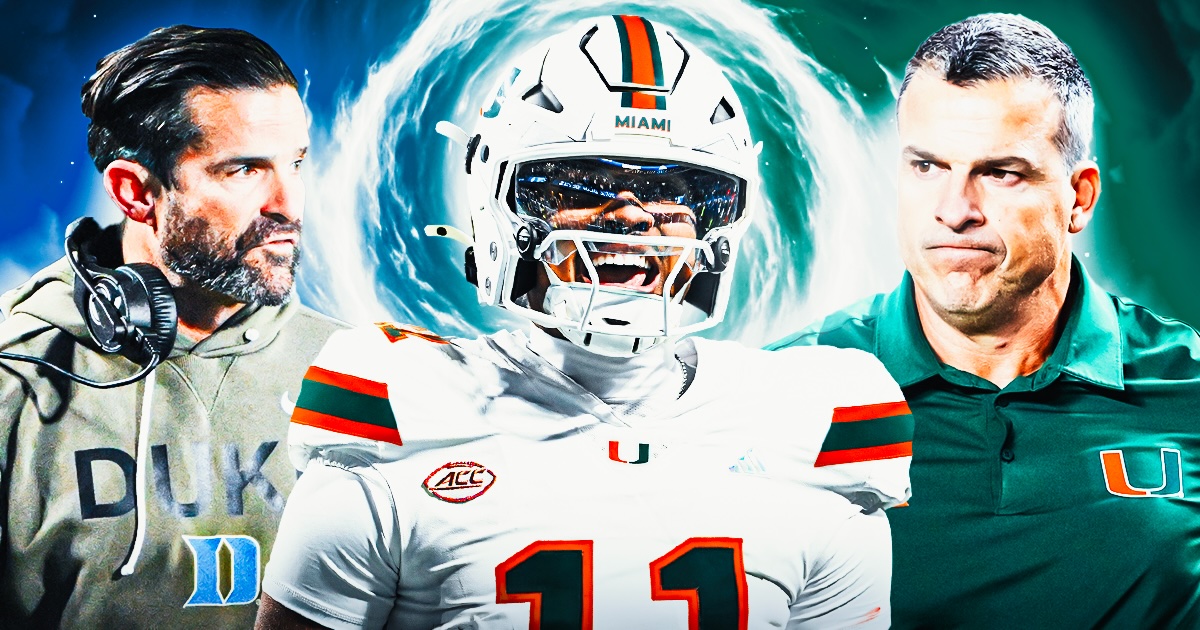
Darian Mensah opens up on Duke transfer, Miami commitment: 'All signs point towards Miami' |
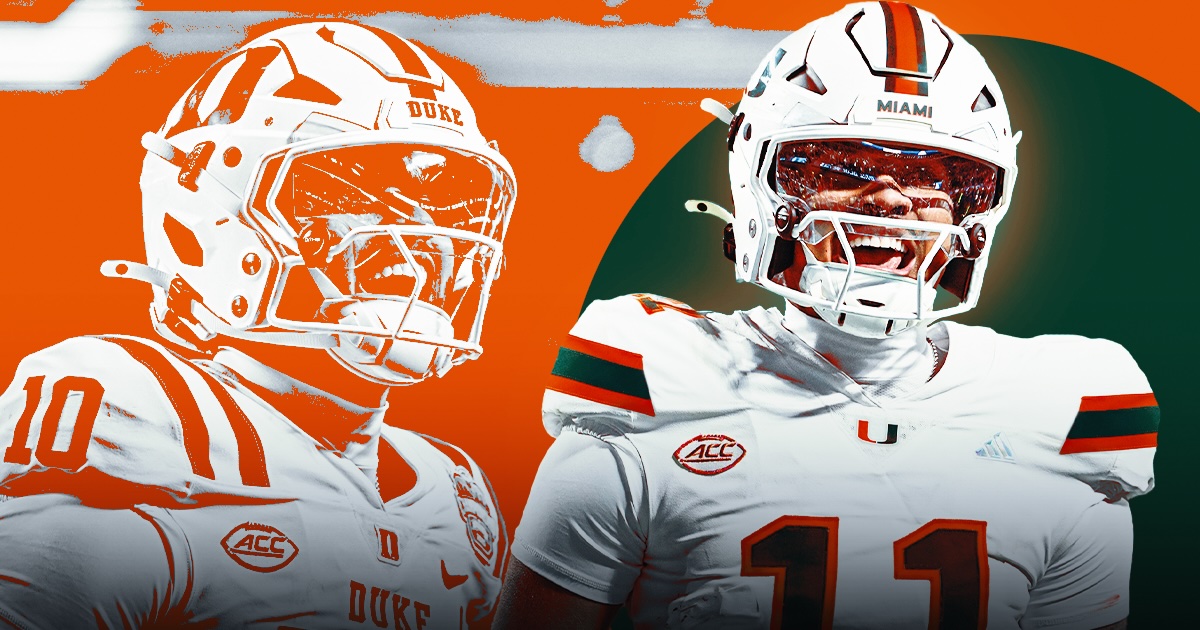
As news broke that Darian Mensah was entering the transfer portal on the final day of the sport's transfer window, rage and shock rolled in from Duke fans. The Blue Devils quarterback was gone after just one season, leaving them scrambling to find a starter for the 2026 season. He committed to Miami earlier this week, with sources telling On3 he reset the transfer quarterback NIL market again. Mensah and Duke reached a settlement agreement to resolve a breach of his two-year, $8 million contract to transfer out of Durham. In his first interview following his exit from Duke and the saga that followed, Mensah explained to On3 that the decision to transfer to Miami was not purely driven by cash. "Miami is going to take me to the place I want to go, which is ultimately the NFL," he told On3. "They've got NFL coaches. Coach [Shannon] Dawson, what he does with quarterbacks, his track record is pretty amazing. The way coach [Mario] Cristobal protects the quarterback, he's always going to have a solid O-line and then the weapons just all around the team. Seemed like it was a great fit for me." "I want to be a first-round draft pick. And all signs point towards Miami. Miami's done it. If you watch what they do, they win. I've always bet on myself, and I always will." It's the second consecutive offseason he hit the portal. Mensah transferred to Duke from Tulane a year ago. But his decision to leave Duke was high-profile, coming on the final day of the portal and carrying significant contractual hurdles. The Blue Devils were initially granted a temporary restraining order prohibiting Mensah from enrolling elsewhere, but the settlement reached this week created a pathway for him to join Miami. Sources told On3 that the quarterback paid Duke a sum as part of the agreement. Mensah told On3 that the most difficult part of the process was his mother dealing with social media commentary. Repped by Noah Reisenfeld and Adie von Gontard of Young Money APAA Sports, he leaned on his team during the transition. "It's been pretty stressful, especially for my mom," he said. "I tried to stay off social media and let my team do all the work. They did a phenomenal job." Mensah finished the 2025 season ranked No. 2 in FBS in total passing yards with 3,973 yards, leading the ACC. He was also second in FBS in passing touchdowns, finishing with a 68% completion percentage while leading Duke to its first outright ACC championship since 1962. The 27-game starter is viewed as a Heisman Trophy favorite entering 2026. Despite the backlash, Mensah expressed gratitude for Durham. "I'm obviously grateful for all the support I've received," he said. "Duke's a special place. It changed my life in the best way possible. Winning a championship is a special thing, and a blessing to be able to enjoy that with my teammates." While winning the ACC was the goal in 2025, Mensah's 2026 goal at Miami is a national title. The Hurricanes reached the national championship game this past season for the first time since 2002. To help his cause, Mensah is bringing leading receiver Cooper Barkate with him. They join a loaded roster featuring rusher Mark Fletcher and standout sophomore Malachi Toney. "I don't think I've ever been in an offense that's going to be as talented as this one," Mensah said. "The opportunities are endless." Once Mensah formally entered the portal last week, he began a dialogue with Miami that solidified his choice. He cited a deep connection with Mario Cristobal, specifically their shared faith. "Me and him relate in a lot of ways off the field," Mensah noted. "The biggest thing is our faith in God. That's something that I admire." During his visit, Mensah also spoke with Shannon Dawson about the scheme. Dawson, who helped develop Cam Ward into a No. 1 pick and led Carson Beck to a title game, plans to blend both styles for Mensah. "We talked about watching Cam [Ward] and the control he had, and then watching [Carson] Beck this year," Mensah said. "We're going to mix the two, because I've been in both styles of offense." Mensah proved in 2025 he was one of the nation's top passers. While he initially announced a return to Duke, the allure of Miami's platform and Dawson's mentorship proved too strong. "Miami was the spot for me to take myself to that next level," Mensah said. "They obviously made it to the national championship game. Why not go ahead and do it again next year?" Read Pete Nakos' story. |
|
|
College football transfer portal winners: LSU, Indiana and more |
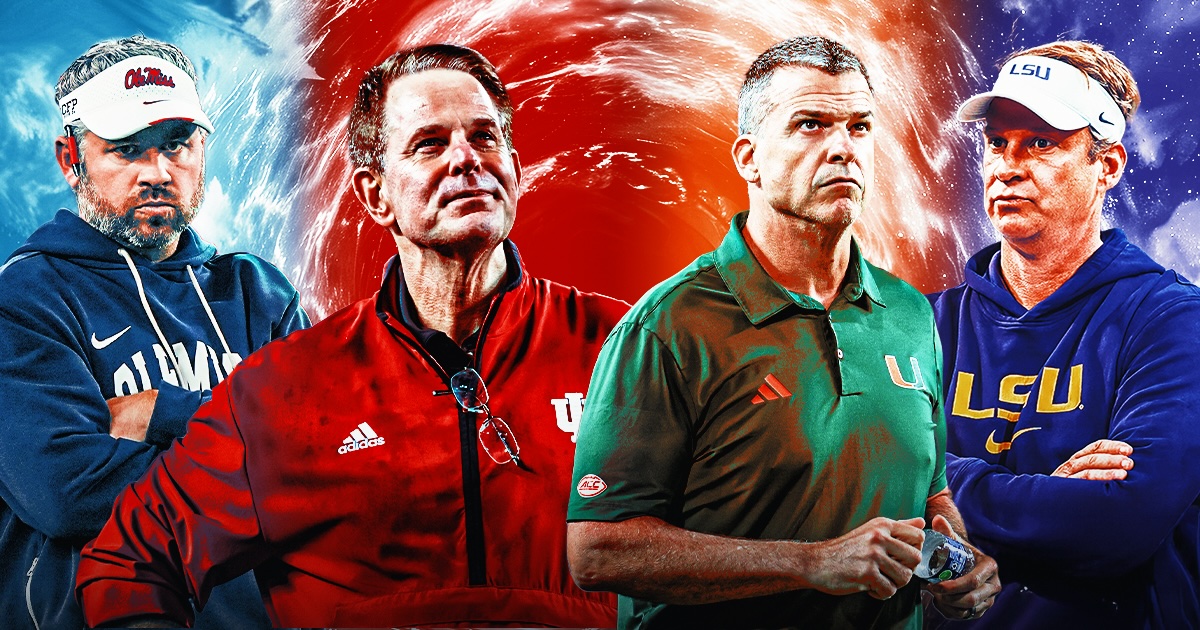
The college football transfer portal window has officially closed, with spring practice around the corner. On3 is breaking down the teams that won the college football transfer portal. LSU Lane Kiffin held the "portal king" title at Ole Miss. He hasn't missed a beat since arriving at LSU in December, as LSU has given him the war chest to assemble one of the top portal classes this offseason. He restocked the Tigers' talent pool with three of the top five players in the transfer portal, according to the On3 Industry Transfer Portal Ranking. Kiffin battled Tennessee and Miami to land the quarterback he wanted in Arizona State's Sam Leavitt. Despite coming off a season-ending injury, the hope is that time with Kiffin and offensive coordinator Charlie Weis Jr. will only elevate his game. Indiana Curt Cignetti has leaned on scouting and evaluation in the transfer portal to win immediately at Indiana. He brought James Madison players with him in Year 1, and last offseason, he scouted the quarterback market and landed on Cal transfer Fernando Mendoza, who won the Heisman Trophy and led the Hoosiers to a national title. Cignetti is only picking up momentum heading into Year 3. The Hoosiers have added TCU starting quarterback Josh Hoover, a 31-game starter who will step in for Mendoza. Michigan State wide receiver Nick Marsh comes in and will be an ideal replacement for Elijah Sarratt, with Charlie Becker returning. The 6-foot-3, 203-pound Marsh gives Hoover a big target in the passing game who can stretch the field. Texas Tech A year ago, billionaire booster Cody Campbell and Texas Tech went all-in on the portal with a vision of winning a Big 12 title and making the College Football Playoff. The Red Raiders accomplished that in 2025, and they've only reloaded again in the transfer portal. The biggest win of the portal cycle for Joey McGuire's program was landing Cincinnati transfer quarterback Brendan Sorsby. Despite taking a visit to LSU following his trip to Lubbock, Sorsby picked the Red Raiders and gives them a three-year starter who will elevate the offense. Texas Tech also added Wake Forest defensive lineman Mateen Ibirogba, who was widely considered the top defensive tackle in the portal, as well as EDGEs Trey White and Adam Trick. Miami As the Hurricanes were marching their way to the College Football Playoff national title game, they were also putting in the work to reload in the transfer portal. Miami landed its biggest portal win of the cycle on Tuesday night, landing Duke quarterback Darian Mensah. It's the third consecutive cycle that Mario Cristobal has gone out and landed one of the top available quarterbacks. The Hurricanes brought in Mensah's leading wide receiver at Duke, Cooper Barkate, along with South Carolina's Vandrevius Jacobs and West Virginia's Cam Vaughn. Missouri EDGE Damon Wilson will have an immediate impact with Rueben Bain Jr. and Akheem Mesidor's NFL departures. The former Georgia transfer finished third in the SEC in 2025 with nine sacks and led the Tigers with 12 quarterback hurries. Check out Pete Nakos' Top 10 portal winners. |
|
|
Who pays player buyouts? Darian Mensah's transfer highlights the confusion |
We are choosing today to write about buyouts. Not the ones found in coaching contracts, but the relatively new concept of buyouts embedded within the school revenue-share contracts of the athletes themselves. Here is the gist of how it works: When School A acquires a player under contract from School B, School A must pay any stated buyout in that player's contract and file that payment into the CAPS roster management system. Most importantly for this story, under House settlement rules codified by the NCAA, School A must then reduce its revenue-share pool in the following year by the total amount spent on buyouts. Plenty of schools are already navigating this. Several administrators told us they have alerted the College Sports Commission about buyouts paid and received to ensure future pool reductions are accounted for. The topic even surfaced during Dabo Swinney's tampering presser, where he alleged that Ole Miss coach Pete Golding texted a Clemson signee to ask, "What's the buyout?" For more like this, subscribe to the On3 NIL and Sports Business Newsletter. Two high-profile situations recently played out that highlight the complexities of liquidated damages: QB Demond Williams and Washington (who stayed) and QB Darian Mensah and Duke (who left after a settlement). Both contracts gave the schools rights over the athlete's NIL, prohibiting other universities from compensating them. Notably, neither deal included a specific, pre-stated buyout amount. In their own ways, these situations show revenue-share contracts working as intended. In Situation No. 1, the player – and potentially his suitor, LSU – found it too expensive to break the deal. Washington likely requested the full $4 million value of the contract. Between that buyout, the subsequent $4 million reduction in LSU's future revenue-share pool, and the $5 million salary Williams would require, the total acquisition cost hit a staggering $13 million. No dice. In Situation No. 2, Darian Mensah paid his way out of his Duke agreement to enroll at Miami. Just like a coach, if you want to break a signed contract, you have to buy your way out. While terms weren't public, Duke, having gone as far as suing its own quarterback, likely didn't settle for much less than the $4 million remaining on his deal. Now, the vexing question: Does Miami's 2026-27 revenue-share pool get reduced by what Mensah paid? One administrator says it "should," but it's complicated. Miami wasn't a party to the settlement. The deal was between Mensah and Duke to resolve a lawsuit. If Miami over-compensates Mensah through their own rev-share deal to reimburse him, they face a pool reduction. If they use third-party NIL avenues, those deals must pass a clearinghouse. The real question is whether the College Sports Commission will find enough evidence to enforce these provisions. We'll leave that for another week. We only have the strength to unclog one street at a time. Don't miss Ross Dellenger's column. |
|
|
Below, you'll find 3 facts about a random college football player. You'll try to guess who the player is based on the facts. Let's go. I took over as Oklahoma's starting quarterback after multiple season-ending knee injuries, running the offense almost entirely from the shotgun because I could no longer scramble.
- In 2003, I threw 40 touchdown passes and won nearly every major quarterback award, including the Davey O'Brien, AP Player of the Year, and Big 12 Offensive Player of the Year.
- I won the 2003 Heisman Trophy and finished my career as Oklahoma's all-time leader in passing yards and touchdown passes.
Answer at the bottom. |
|
|
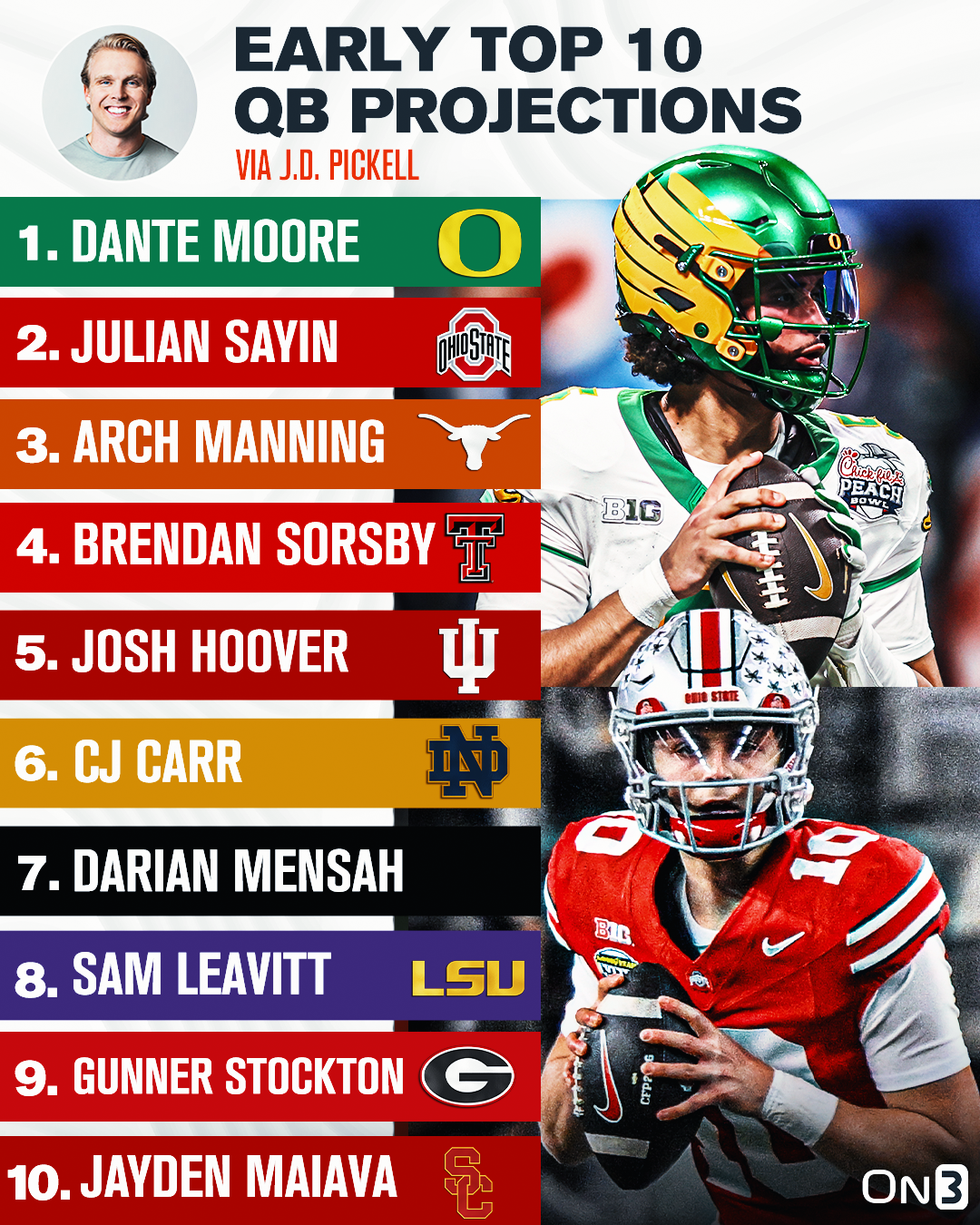
J.D. PicKell's early Top 10 QB projections for 2026 |
|
|
Join now to unlock the best of college and high school sports from our trusted team of insiders. Join for $1. Cancel anytime. |
|
|
Not subscribed to On3? Subscribe here for all the news and analysis from our network of insiders. |
2970 Foster Creighton Drive, Nashville, TN 37204 |
©2026 On3 Media. All rights reserved. |
|
|
|







No comments:
Post a Comment